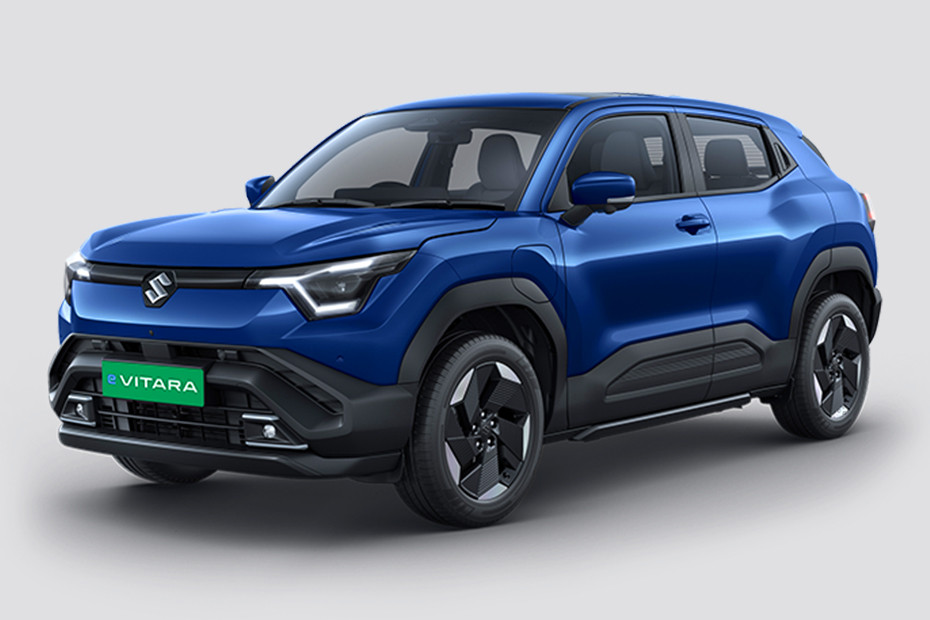
India’s largest carmaker has officially stepped into the electric era. Suzuki Motor Corporation has launched its first-ever electric vehicle in India, introducing the new Maruti Suzuki e Vitara with a bold pricing strategy — a battery rental plan designed to reduce the upfront cost for buyers.
And the numbers are already grabbing attention.

₹11 Lakh Entry Price — But There’s a Twist
The base variant of the e Vitara has been launched at an introductory price of ₹11 lakh (around $12,100). But instead of including the battery cost in the full vehicle price, Maruti Suzuki is offering a battery-as-a-service (BaaS) model.
Under this plan:
- Buyers pay a lower initial vehicle cost
- Battery usage is charged at ₹3.99 per kilometre
- No large upfront battery investment
- Reduced long-term battery replacement concerns
For a market as price-sensitive as India, this could be a major turning point.
Why This Launch Matters So Much
India is Suzuki’s largest global market and the world’s third-largest car market. For years, Maruti dominated petrol car sales but stayed cautious about EVs due to:
- High battery import costs
- Limited charging infrastructure
- Concerns about affordability
Now, with EV sales gaining momentum, the timing appears strategic.
EVs accounted for 5% of India’s car sales in 2025, double the previous year. The government aims to push that to 30% by 2030. Maruti’s entry could accelerate that transition.
Built in India, Exported Globally
The e Vitara has been built at Maruti’s Gujarat plant since August 2025. Interestingly, 13,000 units were already exported to 28 countries in 2025, even before its official domestic launch.
The SUV was developed in collaboration with Toyota Motor Corporation under a global model-sharing partnership — combining Suzuki’s mass-market strength with Toyota’s electrification expertise.
Is the Battery Rental Model Really a Game-Changer?
Battery rental plans are not entirely new in India. JSW MG Motor India introduced a similar concept in 2023. But Maruti bringing it to the mass market changes the scale completely.
Analysts believe the pricing is aggressive.
According to S&P Global Mobility analyst Gaurav Vangaal, the per-kilometre battery cost could be roughly half the running cost of a comparable petrol SUV.
That means:
- Lower operating costs
- Predictable monthly spending
- Reduced battery ownership risk
- Strong appeal to middle-class buyers
And investors reacted positively — Maruti’s shares rose after the announcement.
Why Pricing Was Critical
For Maruti Suzuki, pricing was always going to decide success or failure.
The company built its reputation on affordable combustion-engine cars. Entering the EV market without a strong value proposition could have risked slow adoption.
Instead, by launching at ₹11 lakh with battery rental flexibility, Maruti positions the e Vitara as:
- Affordable at entry level
- Flexible in ownership
- Lower in running cost
- Less risky for first-time EV buyers
Can This Disrupt the EV Segment?
The Indian EV space has heated up in the last year, with launches from:
- Tata Motors
- Hyundai Motor India
- Mahindra & Mahindra
- Tesla Inc.
But Maruti’s real advantage is scale. When it enters a segment, it typically reshapes it.
If adoption picks up quickly, competitors may be forced to:
- Rework pricing strategies
- Introduce battery subscription options
- Lower entry barriers
Final Take: A Calculated and Powerful Entry
The launch of the Maruti Suzuki e Vitara is more than just a new electric SUV hitting the road. It represents a strategic shift in how EVs are sold in India.
With:
- ₹11 lakh introductory pricing
- ₹3.99/km battery rental
- Lower operating costs
- Strong dealership network
- Global development backing
Maruti may have found the formula to bring electric mobility into India’s true mass market.
If executed well, this maiden EV could mark the beginning of a much larger electric transformation for India’s automotive landscape.